
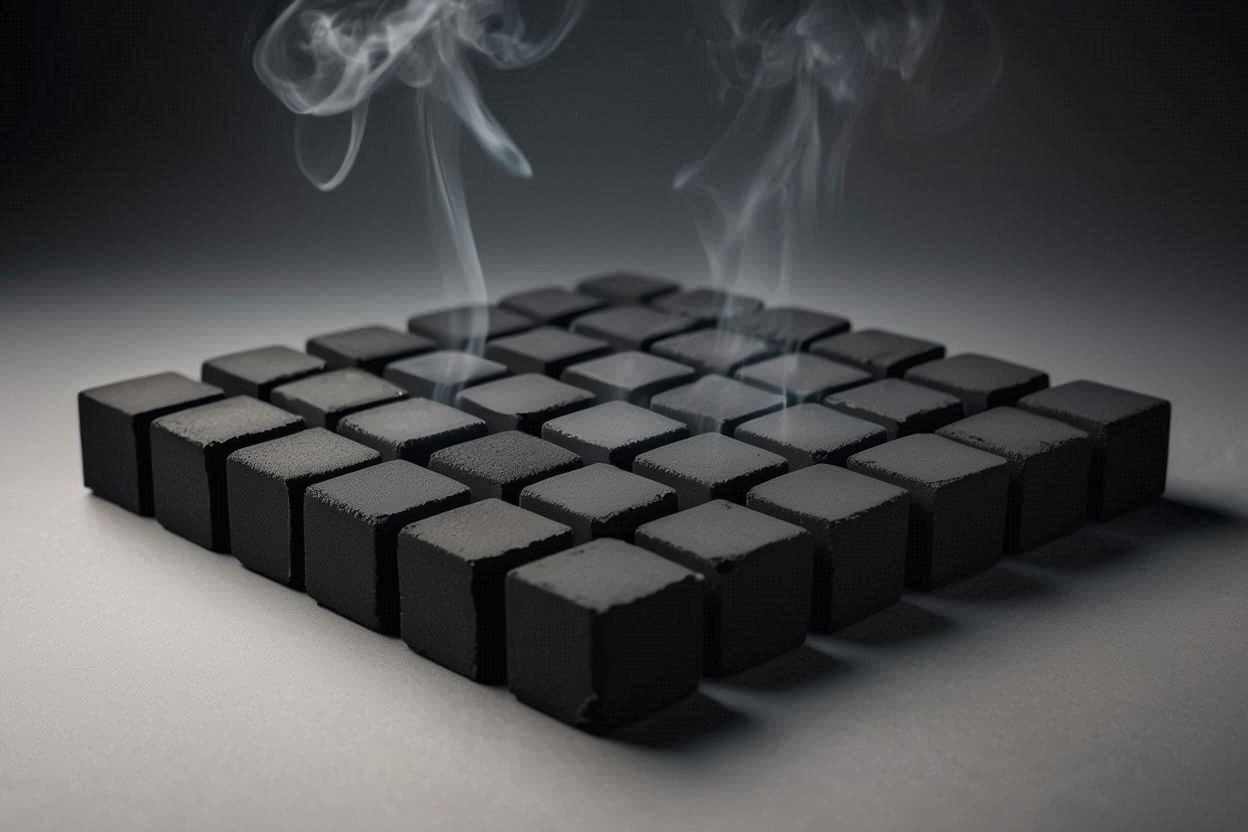
Coconut shell charcoal has been gaining popularity in recent years as a versatile and eco-friendly fuel source. Many people ask, “Is coconut shell charcoal good?” and whether it is really effective and worth the investment. In this article, we will explore the benefits, uses, and environmental impact of coconut shell charcoal, helping you understand why it is considered a superior alternative to traditional charcoal.
In this article, we will explore the benefits, uses, and environmental impact of coconut shell charcoal, helping you understand why it is considered a superior alternative to traditional charcoal.
What Is Coconut Shell Charcoal?
Coconut shell charcoal is a type of charcoal made by burning the hard shells of coconuts in a low-oxygen environment. This process, known as pyrolysis, removes moisture and volatile compounds, leaving behind a dense, carbon-rich material. Compared to regular wood charcoal, coconut shell charcoal is harder, burns longer, and produces less smoke and ash.
In Indonesia, the production of coconut shell charcoal is particularly significant due to the abundance of coconuts, making it a sustainable and locally sourced option. Using Indonesia coconut shell charcoal supports local industries while providing a high-quality product for both domestic and international markets.
Benefits of Coconut Shell Charcoal
1. High Calorific Value
One of the main advantages of coconut shell charcoal is its high calorific value. This means it produces more heat per unit than most other types of charcoal. For cooking, grilling, or even industrial applications, coconut shell charcoal provides consistent and strong heat, making it highly efficient.
2. Low Smoke and Ash Production
Unlike conventional wood charcoal, coconut shell charcoal burns cleaner. It produces minimal smoke and leaves very little ash behind. This makes it ideal for indoor cooking and reduces the effort required for cleanup. For businesses like restaurants and cafes, using coconut shell charcoal ensures a cleaner, healthier cooking environment.
3. Long Burn Time
Coconut shell charcoal is dense and compact, which allows it to burn longer than traditional charcoal. A single batch can provide several hours of steady heat, making it cost-effective and convenient for long cooking sessions or barbecues.
4. Eco-Friendly and Sustainable
The production of coconut shell charcoal utilizes shells that would otherwise be discarded as agricultural waste. By converting these shells into charcoal, manufacturers reduce environmental waste and promote a circular economy. Moreover, sustainable harvesting ensures that coconut plantations remain productive without deforestation.
Uses of Coconut Shell Charcoal
Coconut shell charcoal is highly versatile. It is commonly used for:
- Cooking and grilling: Its clean burn and high heat make it perfect for both household and commercial kitchens.
- Activated charcoal production: Coconut shell charcoal is a primary material for high-quality activated charcoal used in water purification, air filters, and cosmetics.
- Industrial applications: Certain industries use coconut shell charcoal for metal smelting and as a renewable fuel source.
Choosing Quality Coconut Shell Charcoal
When selecting coconut shell charcoal, it is important to consider the source and quality. Authentic Indonesia coconut shell charcoal is known for its durability, consistent size, and minimal chemical residues. Look for suppliers who practice sustainable harvesting and proper production techniques to ensure both environmental responsibility and product efficiency.
Conclusion
Coconut shell charcoal is an excellent alternative to traditional charcoal, offering high heat, long burn time, and minimal smoke. Its sustainable production from coconut waste makes it environmentally friendly, and its versatility extends from household cooking to industrial applications. clarionuniversitytickets.com By choosing quality Indonesia coconut shell charcoal, consumers can enjoy efficient, eco-conscious, and cost-effective fuel that supports local economies.
