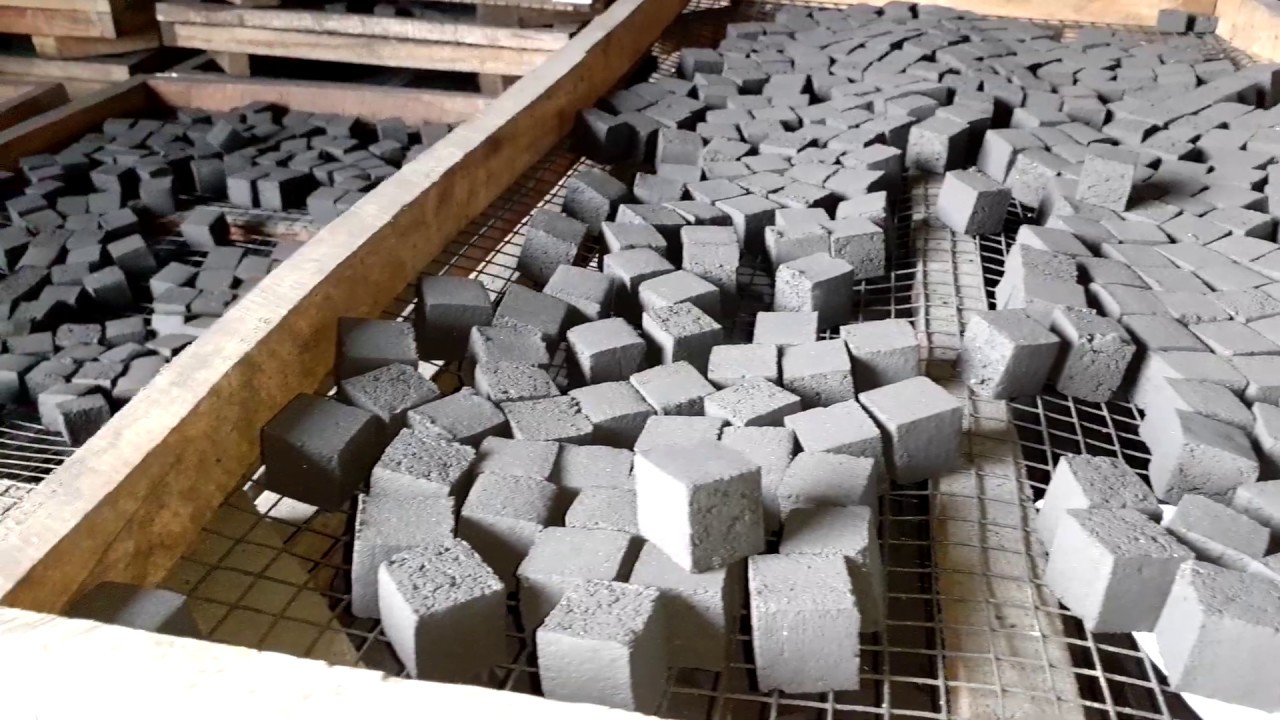
Charcoal briquettes Indonesia – Coconut, from the Latin name cocos nucifera, is a versatile plant widely grown in Asia and the Pacific. The World Atlas in 2017 ranked Indonesia as the largest producer of coconuts in the world, with 19.4 million tons produced. The Philippines and India come second and third, producing 15.9 million tonnes and 10.6 million tonnes respectively.
The fruit is a commonly utilized portion of the coconut. Apart from direct consumption, the coconut fruit is widely processed into a variety of byproducts such as copra, desiccated shredded coconut, coconut charcoal, coconut fiber, and coconut sugar. coconut. Additionally, the fruit of the coconut can be processed into coconut oil, virgin coconut oil (VCO), and coconut milk. These coconut-derived products are produced to meet domestic and export needs. Some of these products have become export products and generate significant foreign exchange.
Despite being the world’s largest producer of coconuts, the export value of coconuts and its products in Indonesia still falls far short of that of exports from the Philippines. Indonesia can only produce less than a third of the Philippines’ export value of $757.3 million. This export value corresponds to the number of processed coconut products created. Indonesia only has 25 types of products, while the Philippines can produce 125 types of products.
Maybe you like to read the following article Maintain Soil Hardness Using Coconut Coir Geotextiles
Economic Benefits of The Industry for Local Communities
One of the processed coconut products that has become an export product from Indonesia are charcoal briquettes made from coconut husk. These briquettes are made by compressing charcoal from burning coconut shells. This product is highly sought after because it is one of the environmentally friendly alternative fuels with no residue or combustion smoke. In addition, this product also produces more heat than charcoal briquettes.
Charcoal briquettes Indonesia are in high demand overseas. According to Kasdi Supagiono, Director General of Plantations at the Ministry of Agriculture, the product is widely exported to China, Brazil, Germany, Lebanon, Malaysia, Netherlands, Russia, Saudi Arabia, Sri Lanka and Vietnam. Based on data from the Central Statistical Agency (BPS) processed by the General Directorate of Plantation in 2019, Indonesia exported 188.05 thousand tons of coconut charcoal briquettes worth export of $145.09 million.
South Korea and Sri Lanka are also two countries that have been using Indonesian coconut shell charcoal products since 2018. According to Agus Andiani, Director of PT Perusahaan Perdagangan Indonesia (PPI) Persero, at that time the volume of The estimated export of each country was about 10,000 tons and 1,000 tons. This product is sourced from coconut shell charcoal products obtained from several regions of Sumatra, West Java, East Java and Sulawesi.
Potential for Growth and Expansion of The Charcoal Briquettes Indonesia
In addition to the countries mentioned above, this product dominates the Egyptian market, reaching 84.72% of the total Egyptian imports of coconut shell charcoal amounting to 1.34 million dollars. According to data from the Egyptian Bureau of Statistics (Capmas), from January to November 2019, Egypt imported $1.13 million worth of coconut shell charcoal briquettes from Indonesia, an increase of 43, 48% compared to the same period of the previous year.
A coconut briquette businessman from Polewali Mandar, West Sulawesi, Sudirman admitted that his processed products were sent to Jordan and Egypt. The company he started in 2017 can export up to 75 tons per month which is transported through the port of Tanjung Perak in Surabaya.
Another source that also ships coconut shell charcoal is PT Karbon Tionin Semesta. The company recorded shipments of 505 tons of coconut shell charcoal from January to June 2020 via Soekarno-Hatta port in Makassar. This amount is equivalent to 183,000 US dollars in foreign currency, with China being the country of destination.