
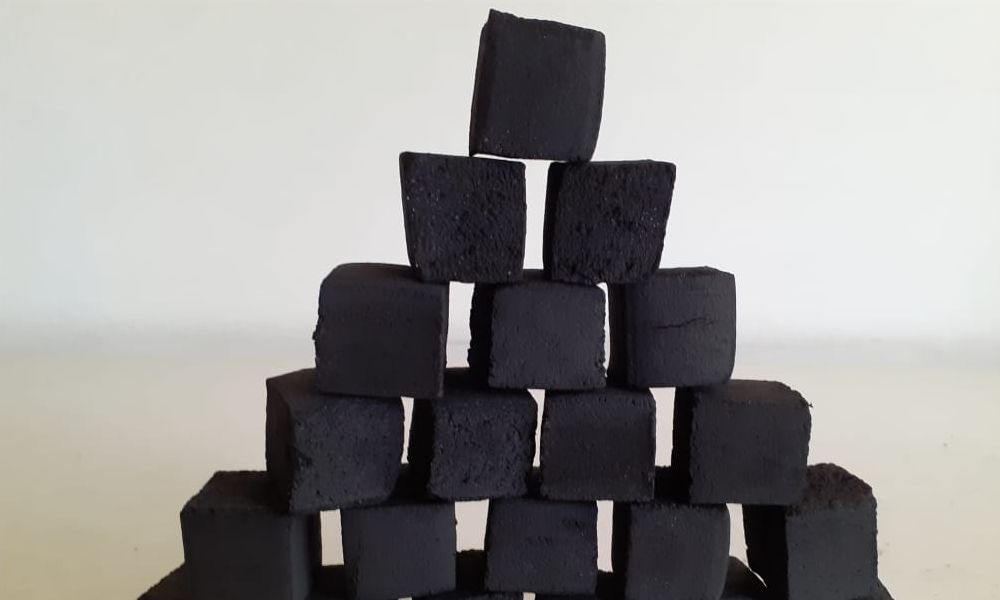
Briquette density and quality, In recent years, there has been a growing emphasis on sustainable energy sources as a means to mitigate climate change and reduce our reliance on fossil fuels. One promising avenue in this pursuit is the production and utilization of biomass briquettes.
These compacted blocks of biomass offer a renewable alternative to traditional fuels like coal and wood, with the added benefit of reduced emissions. However, the quality of these briquettes, particularly their density, plays a crucial role in determining their efficiency and effectiveness as a sustainable energy source.
Before delving into the importance of briquette density, let’s first understand what biomass briquettes are. Biomass briquettes are compacted blocks of organic materials such as agricultural residues, forestry waste, or biomass feedstock.
These materials are compressed under high pressure without the use of any binding agents to form dense and uniform briquettes.
The Importance of Briquette Density
1. The Production Process:
The production process of biomass briquettes typically involves several steps. Firstly, the raw biomass material is collected and prepared for processing. This may include shredding or grinding the material to reduce its size and moisture content.
Next, the prepared biomass is fed into a briquetting machine, where it is subjected to high pressure to form the desired shape and density. Finally, the briquettes are dried to reduce their moisture content and improve their combustion efficiency.
2. Importance of Briquette Density:
Briquette density, defined as the mass of briquettes per unit volume, is a critical parameter that directly influences the quality and performance of biomass briquettes.
A higher density briquette contains more biomass material per unit volume, resulting in increased energy content and improved combustion characteristics. There are several key reasons why briquette density is of utmost importance:
1. Energy Content:
Briquette density directly correlates with the energy content of the briquette. Higher density briquettes contain more biomass material, leading to a greater amount of stored energy per unit volume. This translates to higher heat output and longer burn times, making denser briquettes more efficient for energy production.
2. Combustion Efficiency:
The density of biomass briquettes significantly affects their combustion efficiency. Denser briquettes tend to burn more uniformly and consistently compared to lower density counterparts.
This is due to the fact that denser briquettes have a more compact structure, allowing for better airflow and heat transfer during combustion. As a result, denser briquettes produce less smoke, ash, and emissions, making them an environmentally friendly fuel option.
3. Handling and Transport:
Briquette density also plays a crucial role in the handling and transport of biomass briquettes. Higher density briquettes are more compact and stable, making them easier to store, handle, and transport.
This is particularly important for large-scale biomass energy production, where efficient logistics are essential for cost-effectiveness and viability.
Factors Affecting Briquette Density:
1. Raw Material Composition:
The type and composition of the raw biomass material have a significant impact on briquette density. Materials with higher lignin content, such as sawdust or hardwood residues, tend to produce denser briquettes compared to materials with lower lignin content, such as grass or straw.
2. Particle Size and Moisture Content:
The particle size and moisture content of the raw biomass material also affect briquette density. Smaller particle sizes and lower moisture content generally result in denser briquettes, as they allow for better compaction and binding during the briquetting process.
3. Briquetting Pressure and Temperature:
The pressure and temperature applied during the briquetting process are critical determinants of briquette density. Higher pressures and temperatures lead to greater compaction and densification of the biomass material, resulting in higher density briquettes.
4. Briquetting Machine Design:
The design and specifications of the briquetting machine used also influence briquette density. Machines with higher hydraulic pressure capabilities and better compression mechanisms can produce denser briquettes with greater consistency.
Conclusion Briquette Density and Quality
In conclusion, briquette density plays a pivotal role in determining the quality and performance of biomass briquettes as a sustainable energy source.
Higher density briquettes offer increased energy content, improved combustion efficiency, and enhanced handling characteristics, making them an attractive option for various applications, including heating, cooking, and industrial processes.
Therefore, efforts to optimize briquette density through careful selection of raw materials, process parameters, and equipment design are essential for realizing the full potential of biomass briquettes in the transition towards a more sustainable energy future.
Ready to kickstart your business venture? Look no further than Coconut Briquette! Join the sustainable energy movement while building your empire. With our clean-burning coconut briquettes, you’ll attract eco-conscious customers and elevate your brand. Say yes to profitability and sustainability in one package! Start your journey with Coconut Briquette today.
