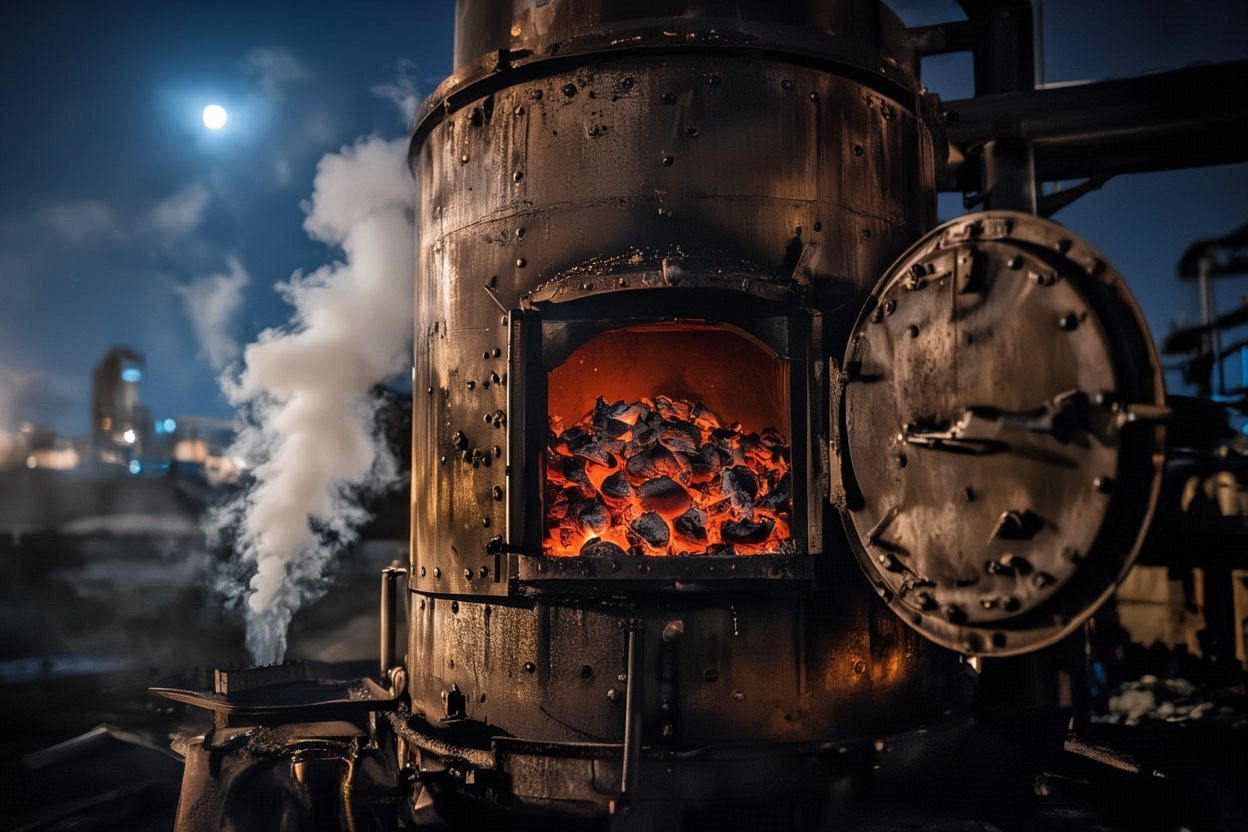
The Hookah Charcoal Carbonization Process defines how raw coconut shells transform into high-quality charcoal used for hookah or shisha. This process plays a major role in determining final product quality, including burn time, heat stability, ash level, and smoke cleanliness. Manufacturers must control every stage carefully to ensure consistent results and meet global demand.
A well-managed Hookah Charcoal Carbonization produces dense charcoal with high fixed carbon content and minimal impurities. Because hookah users expect smooth and clean smoking sessions, producers continuously refine their methods to improve efficiency and product performance.
Raw Material Selection and Preparation
The Hookah Charcoal Carbonization Process begins with selecting premium coconut shells. Mature coconut shells are preferred because they contain higher carbon levels and lower moisture compared to younger shells. This improves combustion quality and reduces unwanted residue.
After selection, workers clean and sort the shells to remove dirt, fibers, and foreign materials. They then crush the shells into smaller, uniform sizes. This step helps heat distribute evenly during the Hookah Charcoal Carbonization Process and prevents uneven carbonization.
Moisture Reduction and Drying Stage
Moisture control is essential in the Hookah Charcoal Carbonization Process. High moisture content slows down carbon formation and increases energy consumption during heating. To solve this, producers dry coconut shells using sunlight drying or industrial dryers.
Proper drying improves carbon efficiency and stabilizes the reaction inside the furnace. When moisture is reduced properly, the Hookah Charcoal Carbonization Process becomes more efficient and produces stronger final charcoal with better structure.
Carbonization Stage in Controlled Furnace
The most critical phase of the Hookah Charcoal Carbonization occurs inside a carbonization furnace. Here, coconut shells are heated in a low-oxygen environment to prevent complete burning. Instead of turning into ash, the material undergoes chemical decomposition and becomes carbon-rich charcoal.
Temperature control is very important, usually maintained between 400°C and 700°C. If heat rises too quickly, the material may burn instead of carbonize properly. Operators constantly adjust airflow and temperature to stabilize the Hookah Charcoal Carbonization and maintain consistent output quality.
This stage determines key characteristics such as hardness, density, and burning duration, which directly affect hookah performance.
Cooling and Stabilization Phase
After carbonization, the material must be cooled carefully. The Hookah Charcoal Carbonization continues with controlled cooling to avoid oxidation and cracking. Producers often place hot charcoal in sealed containers or cooling chambers.
Crushing and Mixing Process
Once cooled, the charcoal is crushed into fine powder. This step ensures uniform particle size, which is important for shaping and burning consistency. In the Hookah Charcoal Carbonization Process, consistency plays a major role in final product performance.
Pressing and Shaping into Briquettes
After mixing, the material goes into high-pressure machines to form briquettes. Pressure determines density, and density affects burn time. A properly executed Hookah Charcoal Carbonization Process ensures briquettes are compact, durable, and long-lasting.
Final Drying and Quality Control
The final stage of the Hookah Charcoal Carbonization involves drying the formed briquettes to remove remaining moisture. This improves ignition speed and storage stability. Controlled drying rooms ensure uniform results across batches.
Conclusion
The Hookah Charcoal Carbonization Process requires precise control from raw material preparation to final drying. Every stage influences the final quality, so consistency and accuracy matter greatly for manufacturers serving global markets.
Producers who need stable raw material supply often work with trusted partners like coconut charcoal briquette suplier to support consistent production quality. Reliable sourcing helps maintain efficiency and product stability in large-scale manufacturing. For more insights into charcoal production and sustainable sourcing, you can also explore jacoid.com for industry knowledge and coconut-based charcoal references.